

Hey there! I'm a supplier of 120w solar lights, and I get a ton of questions from folks trying to figure out how to pick the right 120w solar lights for their needs. So, I thought I'd put together this blog to share some tips and insights that'll help you make an informed decision.

Understanding Your Needs
First things first, you gotta figure out what you need these solar lights for. Are you looking to light up your backyard for some late - night hangouts? Maybe you want to illuminate a pathway or a driveway? Or perhaps you need them for a commercial space like a parking lot or a small business premise.
If it's for a backyard, you'll want lights that create a warm and inviting atmosphere. You might not need super - bright lights, but ones that can spread a soft glow over a decent area. On the other hand, if it's for a pathway or driveway, you'll need lights that are bright enough to help you see clearly and safely navigate at night. For commercial spaces, you'll require high - intensity lights that can cover a large area.
Brightness and Lumens
When it comes to solar lights, brightness is measured in lumens. A 120w solar light can produce a wide range of lumens depending on its design and quality. Generally, for a backyard, you might be okay with a light that produces around 1000 - 2000 lumens. This will give you a nice, cozy feel.
For a pathway or driveway, you'll probably want something in the range of 2000 - 3000 lumens. This will ensure that you can see where you're going without any issues. If it's a commercial space, you'll need a light that can pump out 3000 lumens or more.
It's important to note that not all 120w solar lights are created equal. Some might claim to be 120w but produce fewer lumens than others. So, always check the lumen output before making a purchase.
Battery Capacity
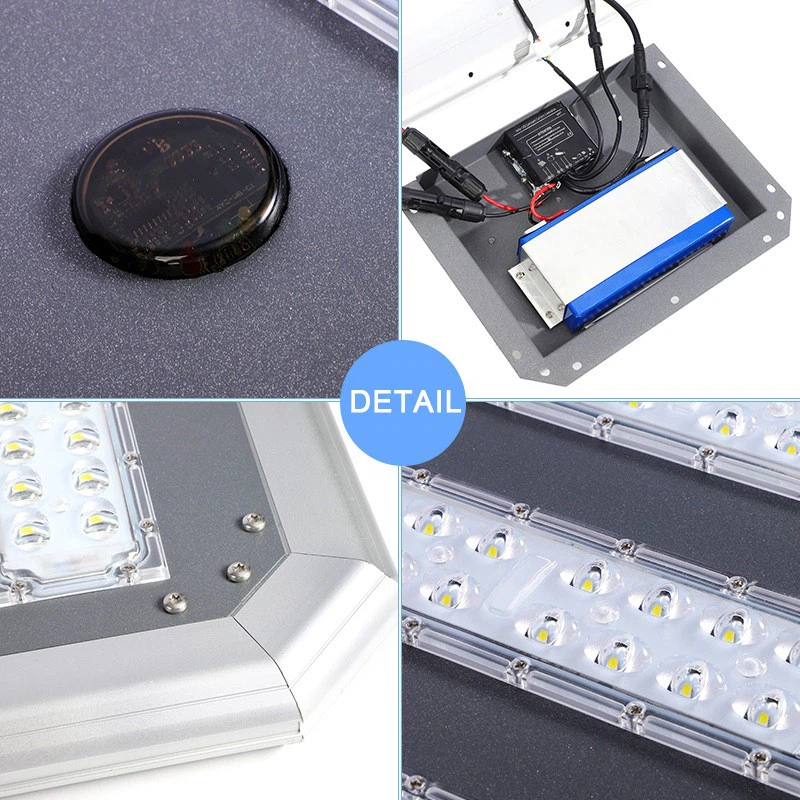
The battery is like the heart of a solar light. It stores the energy collected by the solar panel during the day and powers the light at night. When choosing a 120w solar light, you need to consider the battery capacity.
A larger battery capacity means the light can stay on for longer periods at night. For example, if you live in an area with long nights or cloudy days, you'll want a light with a high - capacity battery. A good rule of thumb is to look for a battery with at least 10 - 12 amp - hours (Ah). This will ensure that your light can run for several hours, even if it doesn't get a full charge during the day.
Solar Panel Efficiency
The solar panel is responsible for converting sunlight into electricity. The efficiency of the solar panel determines how quickly and effectively it can charge the battery. Higher - efficiency solar panels can charge the battery faster, even in less - than - ideal sunlight conditions.
Look for solar panels made from high - quality materials like monocrystalline silicon. These panels are more efficient than polycrystalline ones and can perform better in low - light situations. Also, consider the size of the solar panel. A larger panel can collect more sunlight and charge the battery more quickly.
Durability and Weather Resistance
Your solar lights are going to be outside, exposed to all kinds of weather conditions. So, they need to be durable and weather - resistant. Look for lights that are made from high - quality materials like stainless steel or aluminum. These materials are strong and can withstand the elements.
The lights should also be rated for water resistance. A good IP (Ingress Protection) rating is essential. An IP65 rating means the light is dust - tight and can withstand low - pressure water jets from any direction. This will ensure that your lights can handle rain, snow, and even a bit of splashing.
Installation and Maintenance
You don't want to spend hours installing your solar lights or dealing with complicated maintenance. Look for lights that are easy to install. Many 120w solar lights come with a simple mounting system that you can attach to a pole or a wall.
Maintenance is also important. Some lights require very little maintenance, while others might need you to clean the solar panel regularly or replace the battery after a few years. Choose lights that fit your maintenance preferences.
Comparing with Other Wattages
It's also a good idea to compare 120w solar lights with other wattages. For example, if you don't need a lot of light, you might consider a 30Watt Solar - Powered LED Street Lamp. These are great for small areas like a small garden or a narrow pathway.
If you need a bit more light but not as much as a 120w light, a 40Watt High Power All in One Solar Street Light could be a good option. And if you need even more light than a 120w light can provide, you might look into an 80Watt Solar - Powered LED Street Lamp.
Cost - Effectiveness
Of course, cost is always a factor. You want to get the best value for your money. While 120w solar lights might be more expensive than lower - wattage ones, they can be more cost - effective in the long run. They can cover a larger area, so you might need fewer lights overall.
Also, consider the energy savings. Solar lights don't use electricity from the grid, so you'll save money on your energy bills. And since they have a long lifespan, you won't have to replace them as often.
Making the Decision
Now that you know all these factors, it's time to make a decision. Make a list of your requirements and compare different 120w solar lights based on the criteria above. Look at customer reviews to see what other people have to say about the lights.
If you're still not sure, feel free to reach out to me. As a supplier of 120w solar lights, I've got a lot of experience and can help you find the right lights for your needs. Whether you're a homeowner or a business owner, I can offer you the best advice and products.
If you're interested in purchasing 120w solar lights or have any questions about the selection process, don't hesitate to contact me. I'm here to help you make the right choice and get the best solar lights for your specific requirements.
References
- General knowledge about solar lights and their components
- Industry standards for solar light performance and durability