

Hey there! As a supplier of 120w solar lamps, I often get asked about all sorts of technical details. One question that pops up quite a bit is, "What is the response time of the motion sensor on a 120w solar lamp (if it has one)?" Well, let's dive right into it.
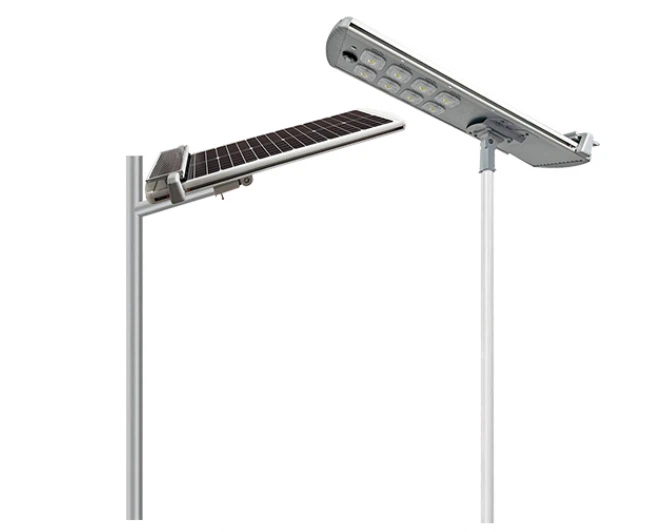

First off, not all 120w solar lamps come with motion sensors. But if they do, the response time is a crucial factor. The response time of a motion sensor refers to how quickly the sensor can detect movement and then trigger the lamp to turn on or adjust its brightness.
There are a few things that can affect the response time. One major factor is the type of motion sensor used. There are mainly two types: passive infrared (PIR) sensors and microwave sensors.
PIR sensors are the most commonly used in solar lamps. They work by detecting changes in infrared radiation, which is emitted by all warm - blooded objects. When a person or an animal moves within the sensor's range, it causes a change in the infrared pattern, and the sensor is triggered. The response time of a PIR sensor in a 120w solar lamp is usually quite fast, typically within 0.1 - 0.3 seconds. This means that as soon as someone walks into the detection area, the lamp can light up almost instantly.
The advantage of PIR sensors is that they are relatively inexpensive and have low power consumption, which is a great fit for solar - powered lamps. However, they do have some limitations. For example, they can be affected by environmental factors like temperature and sunlight. In extremely hot or cold weather, the performance of PIR sensors might degrade slightly, and the response time could increase a bit.
On the other hand, microwave sensors use radio waves to detect movement. They send out a continuous stream of microwave signals and then analyze the reflection of these signals. When an object moves in the detection area, the frequency of the reflected signal changes, and the sensor is triggered. Microwave sensors generally have a very fast response time, often less than 0.1 seconds. They are also less affected by environmental factors such as temperature and humidity compared to PIR sensors.
The drawback of microwave sensors is that they are more expensive and consume a bit more power. So, when it comes to 120w solar lamps, PIR sensors are still the more common choice because of the cost - effectiveness and relatively good response time.
Now, let's talk about how the response time of the motion sensor impacts the functionality of the 120w solar lamp. A fast - responding sensor is great for security purposes. If you're using the solar lamp to illuminate a driveway or a backyard, a quick - reacting motion sensor will ensure that the area is well - lit as soon as someone approaches. This can deter potential intruders and provide a sense of safety.
It also affects the energy efficiency of the lamp. A sensor with a short response time can turn the lamp on only when it's needed, saving energy during the night. For example, if the sensor takes too long to detect movement, the lamp might be off when someone is in the area, or it might stay on for longer periods when it's not necessary.
As a 120w solar lamp supplier, I've seen firsthand how important the motion sensor response time is to our customers. We've been working hard to optimize the performance of our lamps, especially when it comes to the motion sensors. We test different types of sensors and work with our manufacturers to ensure that we're providing the best possible response times.
If you're in the market for a high - quality solar lamp, you might also be interested in some of our other products. For instance, we offer the 40Watt Fully Automatic Cleaning Of Solar Street Lights. This lamp is not only energy - efficient but also has a self - cleaning feature, which is great for maintaining its performance over time.
Another option is the 30Watt Solar - Powered LED Street Lamp. This lamp is perfect for smaller areas and provides a bright, reliable light source.
And if you're looking for a waterproof option, the 30Watt Waterproof All in One Solar Street Light is a great choice. It can withstand all sorts of weather conditions and still perform well.
In conclusion, the response time of the motion sensor in a 120w solar lamp is an important factor that affects both the security and energy efficiency of the lamp. Whether you choose a lamp with a PIR or a microwave sensor, make sure to consider your specific needs and the environment where the lamp will be installed.
If you're thinking about purchasing solar lamps for your project, we'd love to chat with you about your requirements. We can offer you the best advice based on our experience and knowledge in the industry. Don't hesitate to reach out to us for more information and to start a fruitful business relationship.
References
- Textbooks on solar energy technology
- Manufacturer specifications of motion sensors and solar lamps