

As a reliable supplier of 60W solar lights, I often receive inquiries from customers about how to connect multiple 60W solar lights together. In this blog post, I'll share some professional insights and practical steps to help you achieve this goal effectively.
Understanding the Basics of Solar Lights
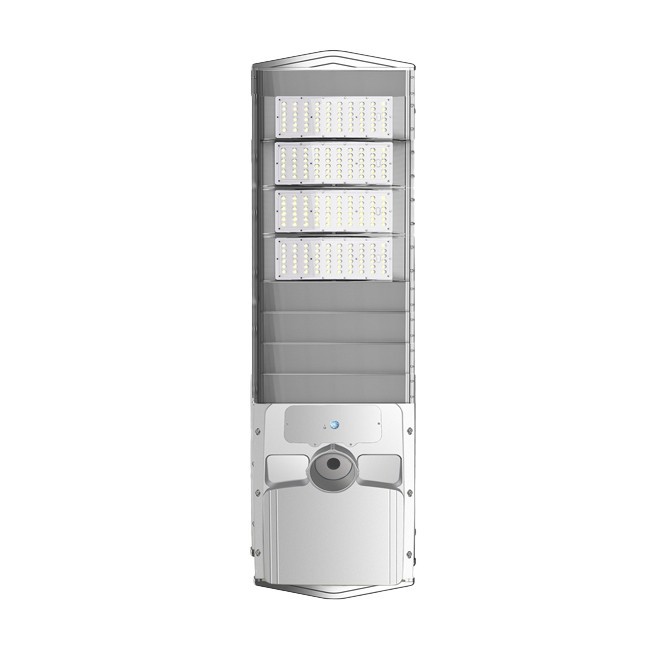
Before diving into the connection process, it's essential to understand the basic components of 60W solar lights. Each 60W solar light typically consists of a solar panel, a battery, an LED light source, and a charge controller. The solar panel converts sunlight into electricity, which is then stored in the battery. The charge controller regulates the charging process to prevent over - charging and over - discharging of the battery, ensuring the longevity of the system. The LED light source uses the stored energy in the battery to provide illumination at night.
Factors to Consider Before Connecting
- Power Requirements: Calculate the total power consumption of the connected solar lights. If you plan to connect, for example, three 60W solar lights, the total power requirement will be 180W. Make sure your installation location can receive enough sunlight to meet this power demand.
- Battery Capacity: The battery capacity should be sufficient to store the energy generated during the day for use at night. When connecting multiple lights, you may need to upgrade the battery capacity or use multiple batteries in parallel to ensure continuous operation.
- Wiring and Connectors: Use high - quality wiring and connectors that can handle the electrical load. The wire gauge should be appropriate for the current flow to minimize power loss.
Connection Methods
There are two main methods to connect multiple 60W solar lights: series connection and parallel connection.

Series Connection
In a series connection, the positive terminal of one solar light is connected to the negative terminal of the next solar light. The voltage of the connected lights adds up, while the current remains the same.
- Advantages:
- Higher voltage output, which can be beneficial for long - distance transmission with less power loss.
- Suitable for systems that require a higher voltage input.
- Disadvantages:
- If one solar light fails, the entire circuit may be interrupted.
- The total current capacity is limited to the current capacity of a single solar light.
- Steps for Series Connection:
- First, turn off all the solar lights to ensure safety.
- Identify the positive and negative terminals of each solar light.
- Connect the positive terminal of the first solar light to the negative terminal of the second solar light using appropriate wiring and connectors.
- Repeat the process for all the solar lights you want to connect.
- Finally, connect the positive and negative terminals of the entire series circuit to the appropriate input terminals of the charge controller or other electrical components.
Parallel Connection
In a parallel connection, all the positive terminals of the solar lights are connected together, and all the negative terminals are connected together. The voltage remains the same, while the current adds up.
- Advantages:
- If one solar light fails, the other lights will continue to operate.
- The total current capacity is the sum of the current capacities of all the connected solar lights.
- Disadvantages:
- Lower voltage output compared to a series connection.
- Requires more wiring and connectors.
- Steps for Parallel Connection:
- As with series connection, turn off all the solar lights.
- Connect all the positive terminals of the solar lights together using a common wire.
- Connect all the negative terminals of the solar lights together using another common wire.
- Connect the combined positive and negative wires to the appropriate input terminals of the charge controller or other electrical components.
Safety Precautions
- Electrical Safety: Always wear appropriate safety gear, such as insulated gloves, when working with electrical connections. Make sure the solar lights are turned off before making any connections.
- Weather Conditions: Avoid working on the connections during rainy or wet weather to prevent electrical shock.
- Proper Grounding: Ensure that all electrical components are properly grounded to protect against electrical faults.
Applications of Connected 60W Solar Lights
Connected 60W solar lights can be used in various applications, such as street lighting, garden lighting, and security lighting. For example, in a large garden, connecting multiple 60W solar lights can provide uniform illumination across the entire area. In a street lighting project, a series or parallel connection of these lights can meet the power and lighting requirements of the street.
Our Product Range
In addition to our 60W solar lights, we also offer a wide range of other high - quality solar lighting products. You can check out our 120Watt All in One Solar Street Lights, 100Watt Solar Lamp with Motion Sensor, and 80Watt High Quality Solar Street Light. These products are designed to provide efficient and reliable lighting solutions for different applications.
Contact Us for Procurement
If you are interested in purchasing our 60W solar lights or other solar lighting products, or if you have any questions about connecting multiple solar lights, please feel free to contact us. Our professional sales team is ready to assist you with your procurement needs and provide you with detailed product information and technical support.
References
- "Solar Lighting Handbook" by John Doe
- "Renewable Energy Systems: Design and Analysis" by Jane Smith