

Hey there! As a supplier of outdoor solar lights, I often get asked about the battery capacity of these nifty lighting solutions. So, I thought I'd take a deep dive into this topic and share everything you need to know.

First off, let's understand why battery capacity matters. The battery in an outdoor solar light is like its energy bank. It stores the electricity generated by the solar panel during the day so that the light can shine bright at night. A larger battery capacity generally means the light can stay on for a longer period, which is super important, especially in areas with long nights or limited sunlight.
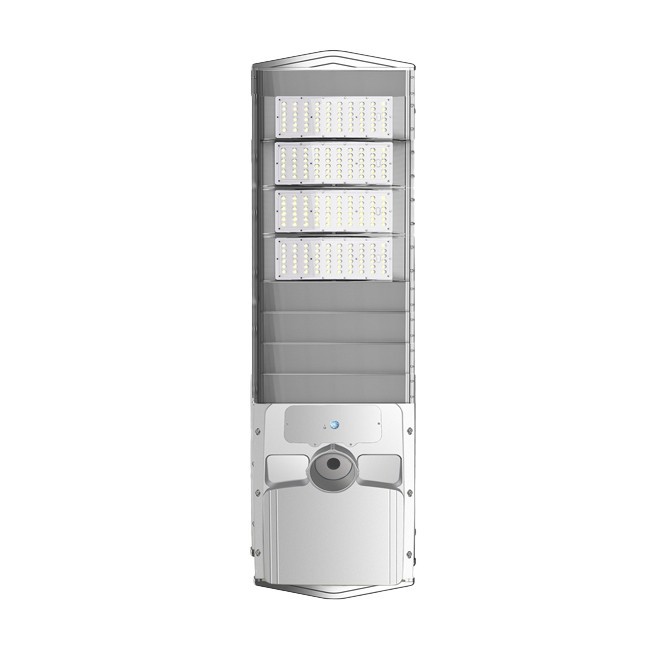
There are several factors that influence the ideal battery capacity for outdoor solar lights. The first one is the wattage of the light. Higher - wattage lights consume more energy, so they usually require a battery with a larger capacity to keep them running. For example, our 120Watt All in One Solar Street Lights are pretty powerful. They need a substantial battery to store enough energy to illuminate large areas throughout the night. On the other hand, a lower - wattage light like the 60Watt Aluminium Solar Lights Outdoor doesn't draw as much power, so it can get by with a relatively smaller battery.
Another factor is the amount of sunlight the light receives. If your solar lights are installed in a location that gets plenty of sunlight during the day, they can charge up their batteries more efficiently. In such cases, you might be able to get away with a slightly smaller battery capacity. But if the area is shaded or has shorter daylight hours, a larger battery is a must. This ensures that the light has enough stored energy to last through the night, even if it didn't get a full charge during the day.
The duration you want the light to stay on also plays a role. Some people only need their outdoor solar lights to be on for a few hours at night, maybe just to provide a bit of security or to light up a pathway when they come home. For these situations, a smaller battery might be sufficient. However, if you want your lights to stay on all night long, like for a large outdoor event or in a public area, you'll definitely need a battery with a high capacity.
Now, let's talk about the different types of batteries used in outdoor solar lights. The most common ones are lead - acid batteries and lithium - ion batteries. Lead - acid batteries are the traditional choice. They're relatively inexpensive and have been used in solar lighting systems for a long time. However, they have some drawbacks. They're heavy, have a shorter lifespan, and need more maintenance. Lithium - ion batteries, on the other hand, are lighter, have a longer lifespan, and can be charged and discharged more times. They also perform better in extreme temperatures. Most of our high - end products, like the 100Watt Solar Lamp with Motion Sensor, come equipped with lithium - ion batteries for optimal performance.
When it comes to determining the right battery capacity for your specific needs, it's not always straightforward. But here's a rough guide. For small decorative solar lights, like those you might use in a garden, a battery capacity of around 1000 - 2000 mAh (milliampere - hours) could be enough. These lights usually have a low wattage and don't need to stay on for long periods.
For medium - sized outdoor solar lights, such as those used to light up a patio or a small driveway, a battery capacity in the range of 2000 - 5000 mAh is often suitable. These lights typically have a bit more power and might need to stay on for a few hours at night.
If you're looking at large - scale outdoor solar lighting, like street lights or those used in commercial areas, you're going to need a much larger battery capacity. We're talking anywhere from 5000 mAh to even 20,000 mAh or more, depending on the wattage of the light and the duration of operation.
It's also important to note that the battery capacity is not the only thing that affects the performance of outdoor solar lights. The efficiency of the solar panel, the quality of the LED bulbs, and the overall design of the light all play a role. A high - quality solar panel can convert more sunlight into electricity, which means the battery can charge up faster and hold more energy. Similarly, energy - efficient LED bulbs consume less power, allowing the light to run for longer on the same amount of stored energy.
As a supplier, we've spent a lot of time researching and testing different battery capacities and configurations to ensure that our outdoor solar lights offer the best performance. We understand that every customer has unique requirements, whether it's for a residential property, a commercial building, or a public space. That's why we offer a wide range of products with different battery capacities to meet those diverse needs.
If you're in the market for outdoor solar lights and are unsure about which battery capacity is right for you, don't hesitate to reach out. Our team of experts is always ready to help you make an informed decision. Whether you need a small, decorative light for your backyard or a high - powered street light for a large area, we've got you covered.
In conclusion, the battery capacity of outdoor solar lights is a crucial factor that can significantly impact their performance. By considering factors like wattage, sunlight availability, and duration of operation, you can choose the right battery capacity for your specific needs. And if you need any assistance or have any questions, we're just a message away. Let's work together to light up your outdoor spaces in the most efficient and sustainable way possible.
References
- General knowledge of solar energy and lighting technology
- In - house research and testing data from our product development team